
Initiate a referral
Authorized users can submit required service, destination, legal-status, risk, clearance, and scheduling information through the secure Partner Portal.
Telephone intake remains available 24/7.Aquila designs behavioral health and specialty transportation programs around referral pathways, geography, passenger populations, service levels, technology, reporting obligations, and the realities of each partner’s operating environment—from the first referral through ongoing performance review.

Aquila works directly with authorized partners to reduce uncertainty, protect continuity, and establish clear operational expectations before service begins.
A transportation program must fit the system it serves. Aquila coordinates directly with clinical teams, referral sources, courts, crisis systems, receiving facilities, law enforcement, and program administrators to reduce uncertainty at every handoff.
We combine compassionate passenger interaction with disciplined operating controls so partners receive both a humane service experience and the documentation, responsiveness, and accountability expected of a critical contractor.
ResponderShield Nexus (RSN) connects authorized partner users with Aquila's 24/7 dispatch operation while preserving direct human communication. Access and visibility are configured around each organization's responsibilities and agreement.
Authorized users can submit required service, destination, legal-status, risk, clearance, and scheduling information through the secure Partner Portal.
Telephone intake remains available 24/7.Partners can respond to correction requests, review acceptance or rejection information, communicate with Aquila, and receive assignment or ETA updates.
Technology supports—not replaces—dispatch.Authorized users can follow referral and transport status, milestones, delays, exceptions, arrival, handoff, and documented completion.
Access is limited by organization and role.Program administrators can review contract-defined KPIs, volume, reliability, quality information, audit history, trends, and corrective-action follow-up.
Reporting is configured to the agreement.Each program is configured to the authority, workflow, funding source, population, geography, and performance expectations of the partner.
Admissions, crisis-center movements, residential placements, step-up and step-down transitions, recovery transportation, and continuity-of-care support.
Explore provider support →Non-ambulance discharge, transfer, placement, and behavioral health transportation that supports bed flow, care management, and receiving coordination.
View the provider pathway →Regional or statewide programs with contract governance, implementation controls, performance standards, audit-ready records, and public accountability.
Integrated referral intake, resource assignment, ETA communication, crisis receiving coordination, and transportation status visibility.
Competency evaluation and restoration transportation, legal-document verification, chain-of-custody procedures, and documented transfers.
Civilian transportation that reduces officer time committed to long-distance behavioral health movements while preserving lawful authority and safe transfers.
Transportation models supporting youth, older adults, housing, recovery, disability, rural access, and other vulnerable or underserved populations.
Eligible service models structured around authorization, network, credentialing, billing, utilization, documentation, and quality requirements.
A specialized transportation partner takes ownership of coordination, movement, monitoring, handoff, and documentation—helping public and healthcare organizations protect scarce internal resources.
Aquila assumes authorized civilian transportation while agencies retain appropriate legal and safety oversight.
Coordinated pickup and receiving confirmation support discharge planning, placement movement, and bed availability.
Referral verification, status updates, exception management, and confirmed handoffs reduce uncertainty between facilities.
Regional staging, route planning, redundant dispatch, and scalable resources support difficult service geographies.
Time-stamped milestones, incident workflows, KPI reporting, and service-verification records support oversight and audit readiness.
Aquila uses a controlled implementation process with accountable workstreams, documented acceptance criteria, and joint readiness reviews.
Confirm service areas, referral sources, volumes, response standards, passenger populations, reporting, and regulatory obligations.
Establish staffing, fleet, staging, dispatch, escalation, supervision, technology, and continuity strategies.
Assign leadership, hire or transfer personnel, complete screening, training, competency validation, and field preparation.
Build referral workflows, user access, dispatch rules, forms, notifications, reports, dashboards, and data protections.
Conduct tabletop exercises, test referrals, communications checks, route validation, incident simulations, and partner acceptance review.
Use heightened monitoring, daily performance review, rapid issue correction, and structured partner communication after go-live.
Aquila’s redundant Denver and Nashville dispatch centers operate 24/7/365 and share RSN-supported operational visibility. They can support one another during demand spikes, weather events, evacuations, staffing disruptions, or technology issues.
Discuss Referral Integration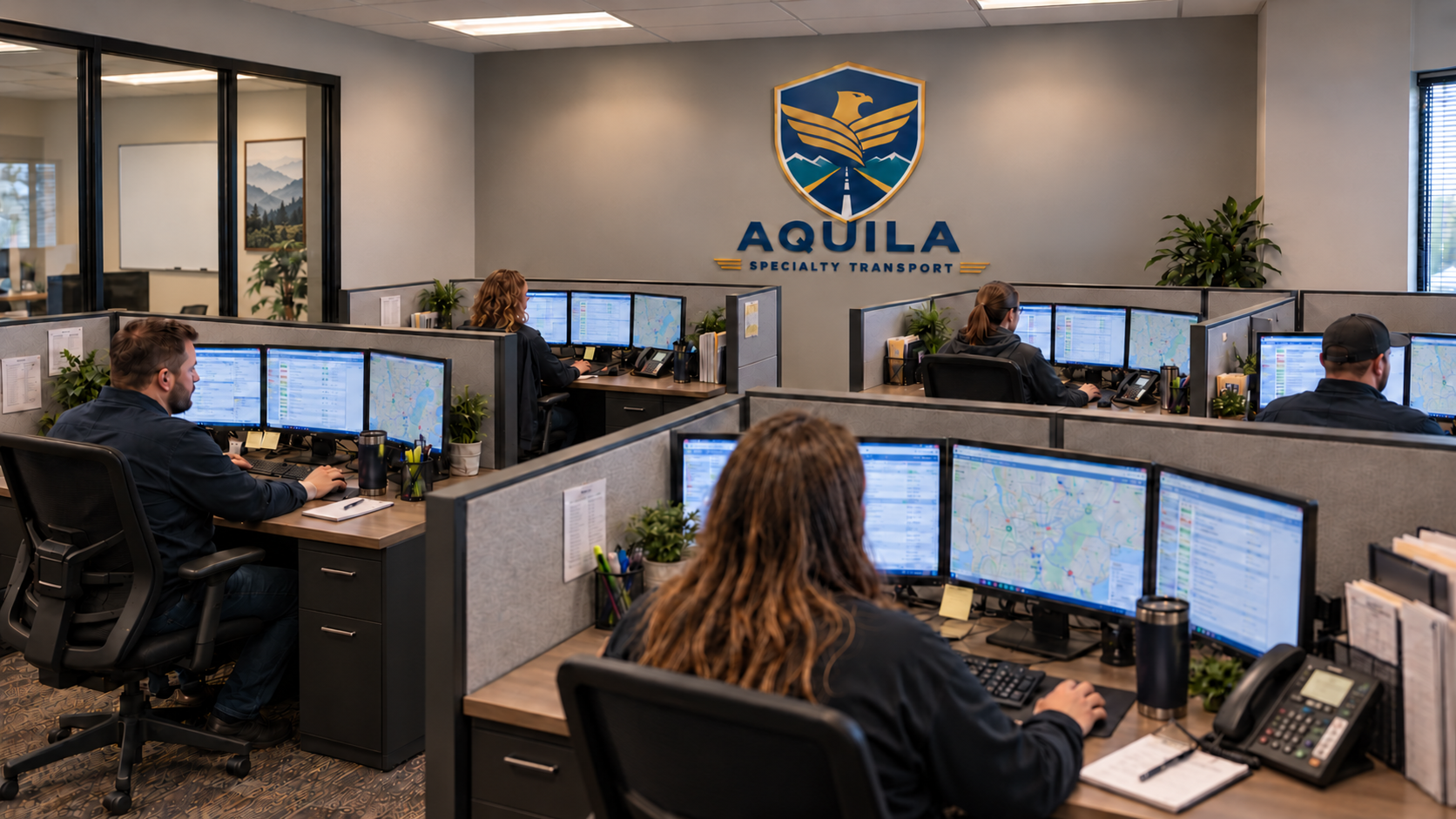
ResponderShield Nexus and related Aquila systems support live operational visibility, dispatch communication, documentation, GPS-informed oversight, AI-assisted summaries, KPI dashboards, incident review, and client reporting.
Technology supports—not replaces—trained judgment, supervisory accountability, and direct communication with referring and receiving partners.
Explore Technology & TransparencyMetrics are tailored to each agreement and supported by defined ownership, review cadence, corrective-action procedures, and source documentation.
Referral availability, answer times, assignment times, pickup response, ETA accuracy, geographic coverage, and rural performance.
Completed transports, cancellations, refusals, failed transports, preventable delays, vehicle availability, and staffing compliance.
Injuries, accidents, elopements, restraint use, law-enforcement involvement, complaints, grievances, and corrective actions.
Training compliance, credential status, background-screening completion, continuing education, supervision, and turnover.
Communication quality, facility handoffs, issue resolution, service feedback, and recurring operational concerns.
Complete time stamps, accurate mileage, required fields, timely reports, audit support, and record-retention compliance.
Programs receive defined operational ownership, escalation pathways, incident-notification rules, performance reviews, and corrective-action procedures.
Aquila’s multi-state infrastructure supports cross-region coordination, backup dispatch, fleet substitution, supervisor escalation, staffing contingencies, severe-weather planning, and controlled service recovery.
For rural and frontier programs, we combine demand analysis, staged resources, flexible scheduling, long-distance planning, and partner communication rather than applying metropolitan assumptions to low-density communities.
Explore Regional CapabilityYes. Depending on scope and agreement, Aquila can establish dedicated personnel, vehicles, supervision, intake procedures, reporting, and regional capacity. Shared-resource models are also available for lower or variable demand.
Yes. Rural planning may include staged resources, flexible staffing, long-distance route controls, weather contingencies, receiving-facility confirmation, and alternative coverage strategies.
Yes. We can configure telephone, electronic, facility-specific, or system-integrated workflows subject to technical, privacy, authorization, and contractual requirements.
Yes. Reporting can include referral activity, response performance, completion outcomes, mileage, safety events, workforce compliance, complaints, and other contract-defined indicators.
Yes. Authorized users can submit and manage referrals through the secure RSN Partner Portal when portal access is included in the program. Aquila's 24/7 dispatch centers also accept telephone referrals.
No. Portal participation is optional. Organizations that prefer direct coordination can contact Aquila dispatch, and trained personnel will enter and manage the referral in RSN.
Partner access is restricted by organization and role. Users receive only the referral, trip, reporting, or administrative visibility authorized for their responsibilities and agreement.
RSN is integration capable. API, SSO, EHR-related, billing, claims, and other connections are evaluated program by program and require appropriate scoping, security review, configuration, partner participation, and testing.